Agile And Scrum Drift In Development
(Reading Time: 2 minutes 42 seconds)
Introduction
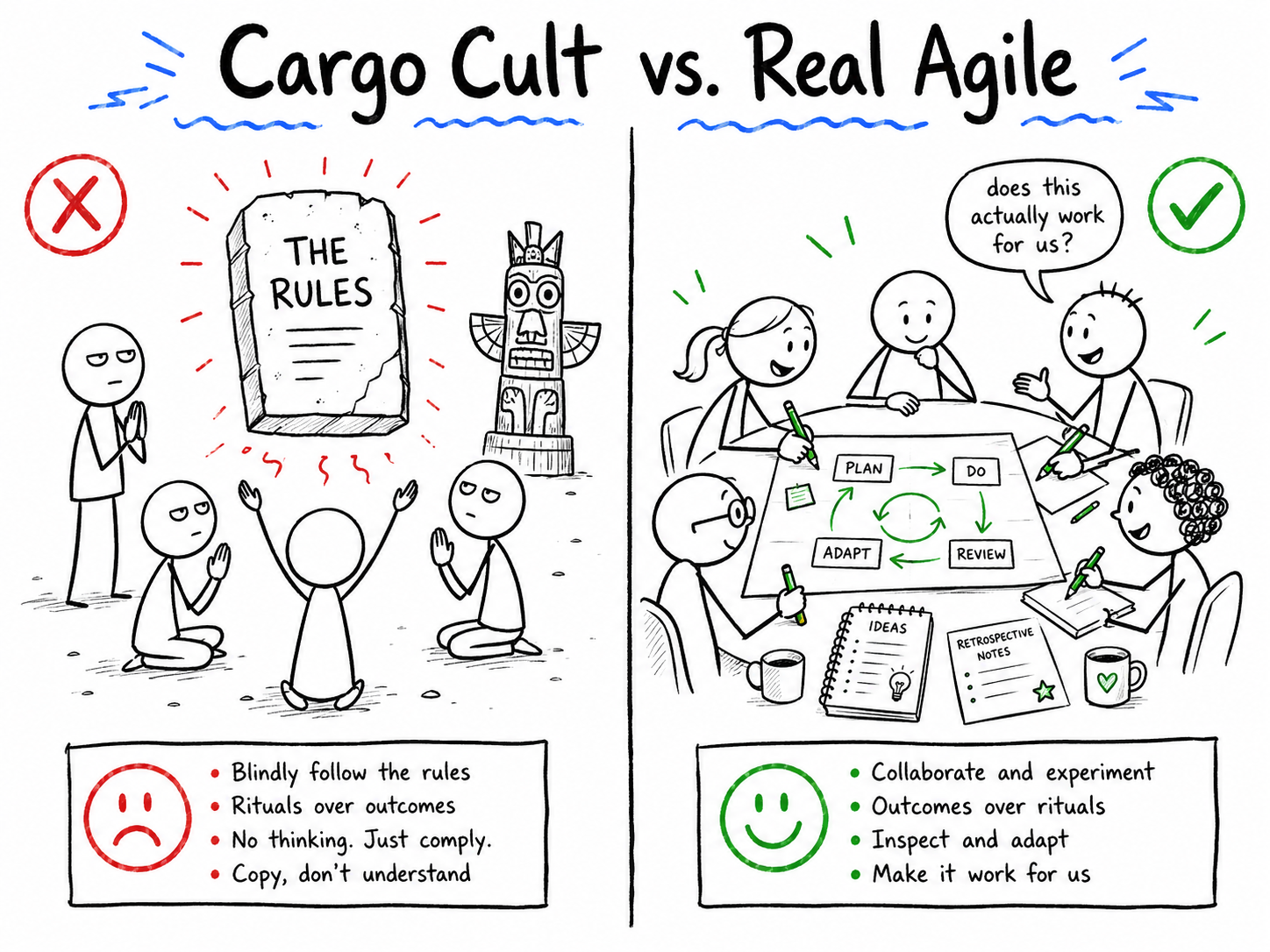
There are many failure states of agile. One well known one is cargo-culting, where the rules of agile are followed on the surface without a deeper understanding of the practices. Another one is dogmatism, where the rules of agile are followed too strictly. This article deals more with dogmatism, and gives information on ways my team have deviated from strict-agile. Still, as a beginner blindly following rules, guardrails, or ceremonies is probably a good idea. Once the underlying principles are understood it’s a lot easier to start deviating from them. A lot of companies claim to be agile without following the actual principles. Beginners to agile should follow the rules more closely, before they start learning when and where to deviate. Being an experienced agilist involves an understanding that they are a necessarily ideal set of values and principles. It also isn’t a blind following of rules, and never was. The agile or XP way of working is meant as a starting point that should be constantly adjusted. We will discuss different ways the teams I have worked on have deviated from traditional agile in productive manners.
Standups
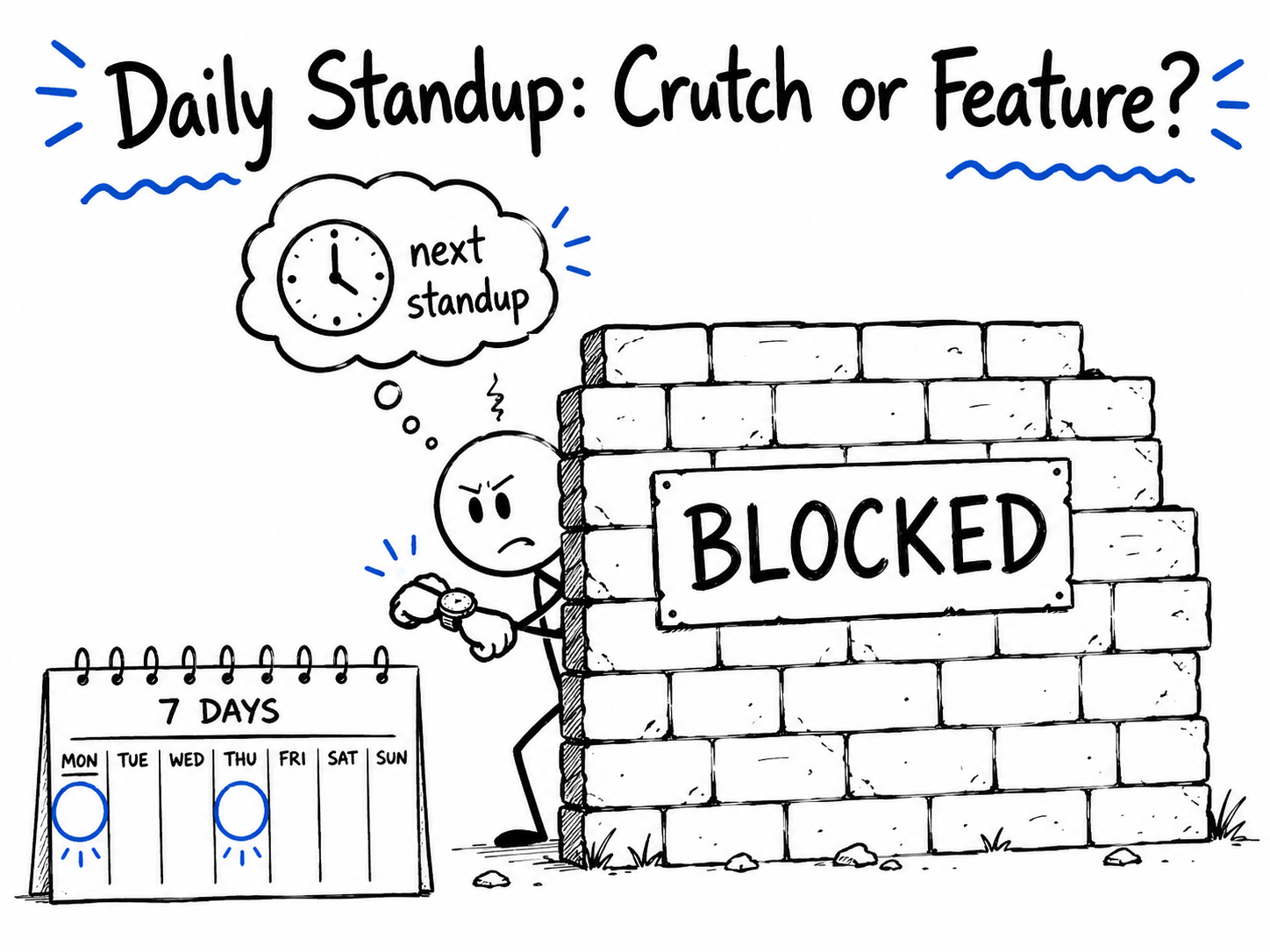
Standups are supposed to be daily. This is the generic advice that is throughout the industry, and may cause arguments if it was suggested to run standup at a different frequency. However, we run a backend meeting once a week, and two more standups throughout the week. From a development standpoint that is not ideal, since developers are working closely enough together that they need daily updates. However, this daily standup can be more of a crutch for developers than a feature. Developers just remain stuck until the following standup, rather than unblocking themselves. External stakeholders only need to be updated a couple days a week, so it fits better with their schedule to only have a couple standups.
Who Writes The Stories
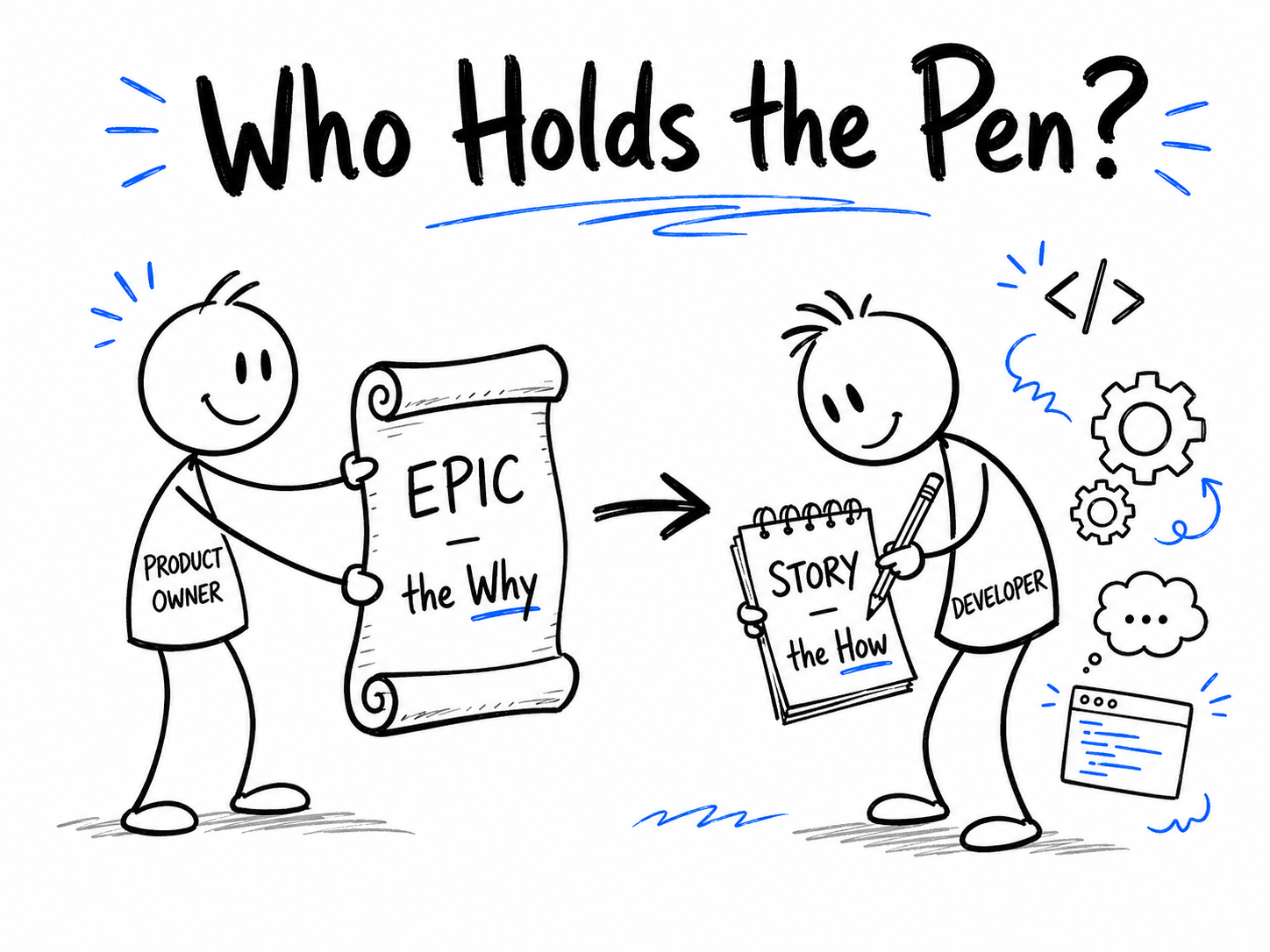
Traditionally, product owners are the ones writing all epics and stories. The argument is that the stories should be from a user perspective, and list requirements. However, there is a tradeoff to this in that product owners do not understand the development flow. They typically have a very poor understanding of the codebase in comparison to the developers. Therefore, on our team the epics are typically written by the product owners, while the detailed stories are written by developers. This has allowed us to provide more detailed plans and timelines on a given endgoal.
Milestones
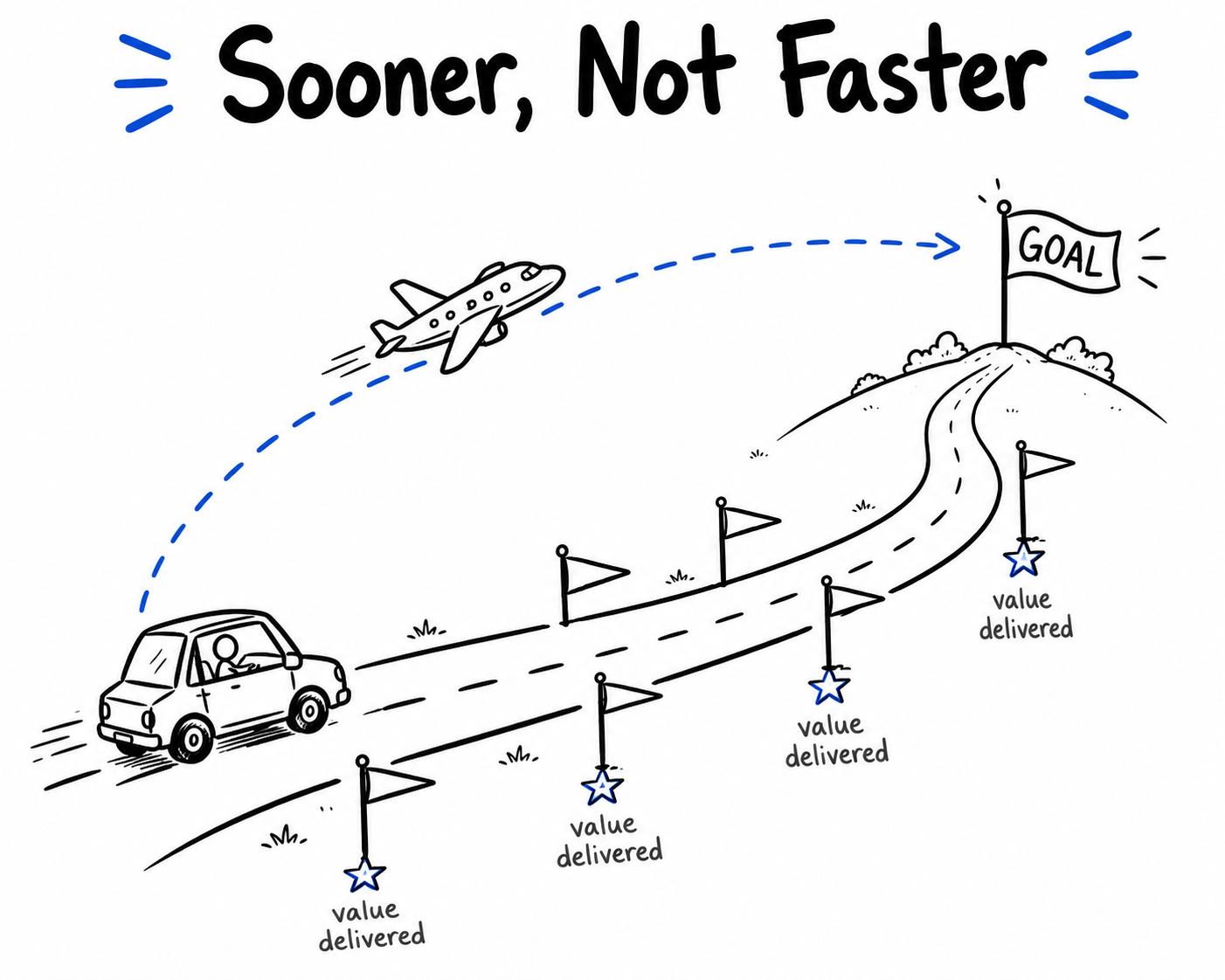
We also tend to deliver value as incrementally as possible in terms of milestones. We determine the overall end goal, and then think of different ways to accomplish the end goal. An analogy for this is you could often drive by car, or fly by plane to a given destination. There are tradeoffs to both these approaches. Likewise, we think of the various stopping points in the development of the feature or overall goal that provides value to the user, and then deliver the value in those increments.
What We Don’t Touch: Retros
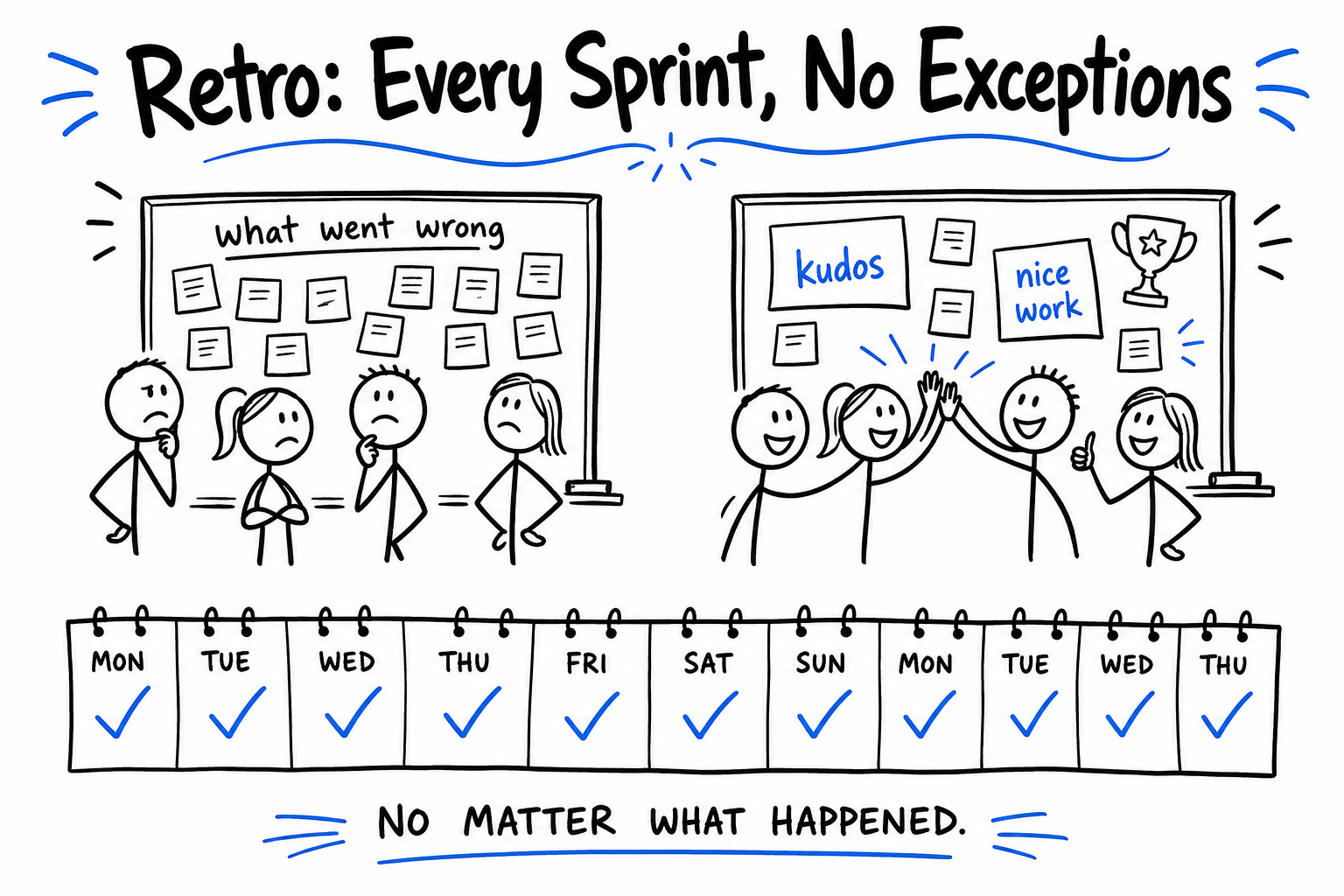
Not everything gets bent, and retrospectives is an example of a ceremony we are doing in a very traditional manner. Retrospectives happen whether something happened during the sprint or not. Conflict is kind of the default expected behaviour so it is rare that we have nothing to talk about. However, in the unlikely event everything went well, the retrospective can be filled with praise and kudos, or reflection on what has been going well over the past several sprints.
The Guardrail Is You
Not all good ideas should be introduced to the team. I’ve often been in a scenario where I was presented with conflicting opinions to my own, and rather than dig into my arguments I had to take a step back. It’s important to go with the will of the team. If most of the team disagrees with your suggested “improvement” then it should not go through. Introducing adjustments to Agile through the retro is a valued practice that allows for necessary adapation of the Agile Manifesto, or XP principles.